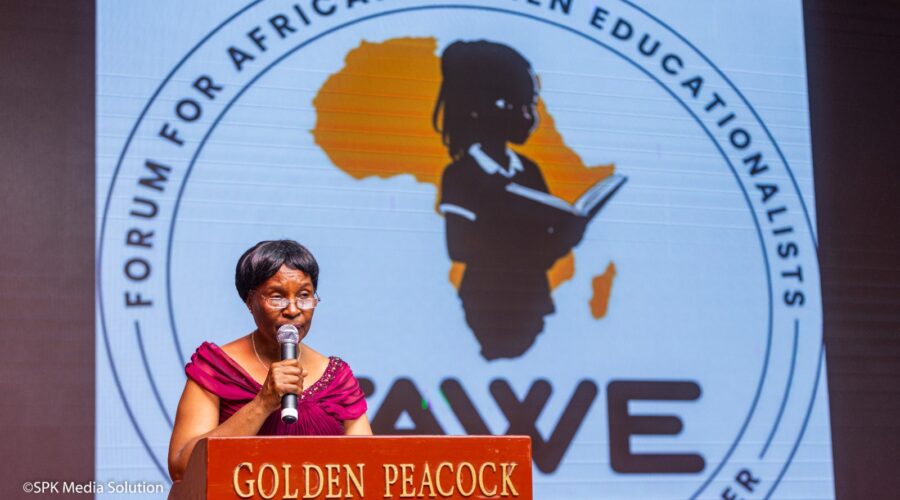
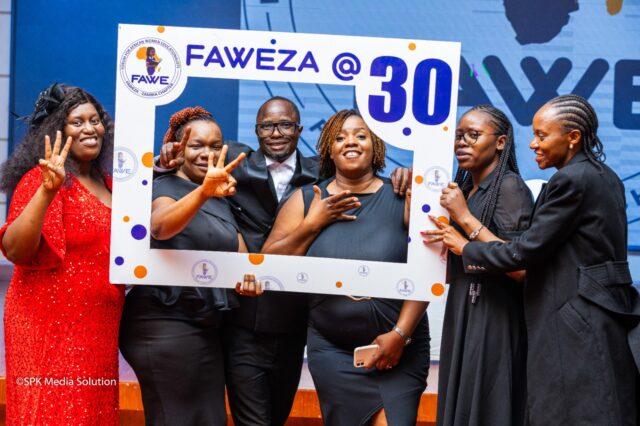
Vice President W.K. Mutale Nalumango has commended the Forum for African Women Educationalists of Zambia (FAWEZA) for its sustained role in advancing girls’ education and strengthening the country’s education sector through strategic partnership with Government.
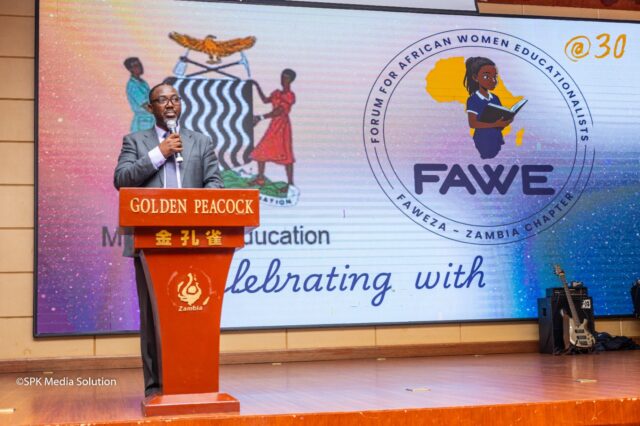
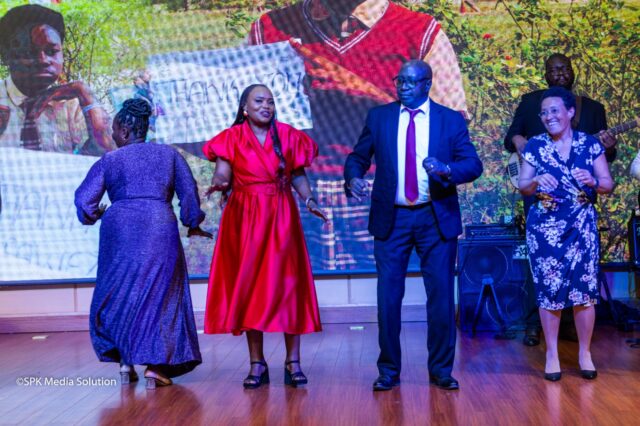
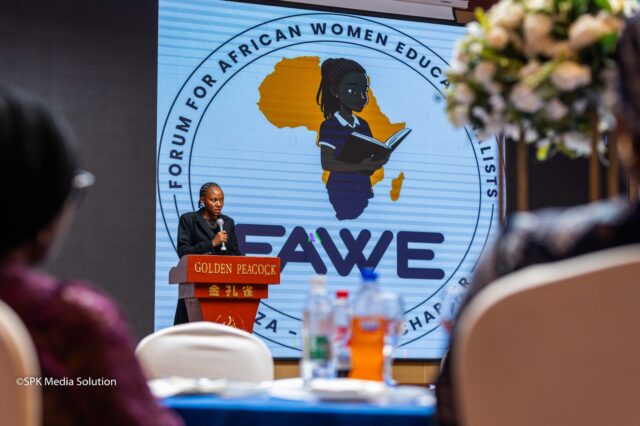
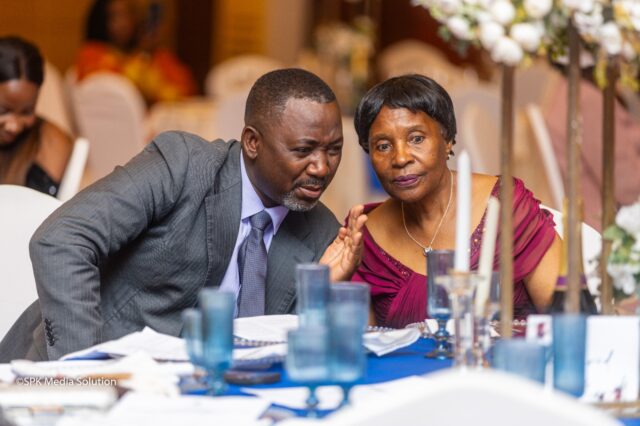
Speaking as Guest of Honour during FAWEZA’s 30th anniversary celebration held at the Golden Peacock Hotel in Lusaka on March 6, the Vice President, who was represented by Ministry of Education Permanent Secretary for Education Services Dr Kelvin Mambwe, described FAWEZA as a key partner in ensuring that education remains accessible, inclusive and transformative for vulnerable learners across Zambia.
“Government recognizes FAWEZA as a strategic partner in the education sector. Over the years, your organization has complemented Government efforts by supporting vulnerable girls, advocating for gender-responsive pedagogy, mentoring learners, and strengthening community engagement in education.”
The Vice President said the long-standing collaboration between Government and FAWEZA has contributed significantly to Zambia’s national development agenda, as well as global commitments on education and gender equality.
“The collaboration between the Government of the Republic of Zambia and FAWEZA has been anchored in a shared vision that every child, regardless of gender or socio-economic background, must have access to quality education.”
She noted that Government’s Free Education Policy has helped remove financial barriers that once prevented many children, especially girls from vulnerable households, from accessing education.
“This bold step has resulted in a significant increase in enrolment across the country. Thousands of learners who had dropped out due to financial constraints have returned to school. Many more, especially girls from vulnerable households, now have a renewed opportunity to complete their education,” said the Vice President.
The Vice President further highlighted ongoing efforts by Government to strengthen the education system through teacher recruitment, classroom construction and the expansion of the school feeding program.
“For many vulnerable learners, especially in rural and peri-urban communities, a meal at school is the difference between attendance and absenteeism,” She said.
The Vice President also commended FAWEZA for its long-standing support to girls through bursaries, mentorship and advocacy, saying the organization’s impact is reflected not only in statistics, but in the lives, it has helped shape.
“Your legacy is not only in the number of beneficiaries supported, but in the doctors, teachers, engineers, leaders, and change-makers who once sat in classrooms supported by FAWEZA.”


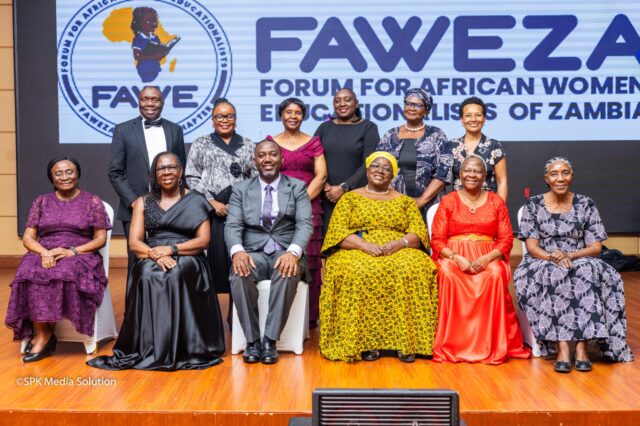
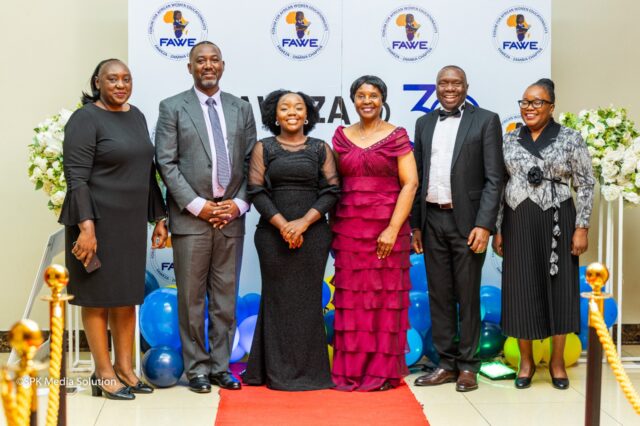
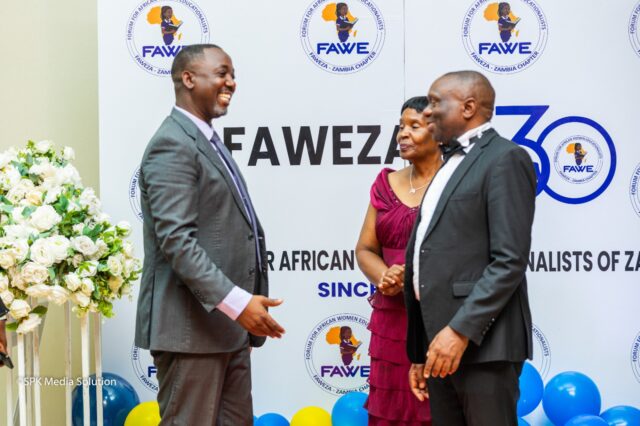
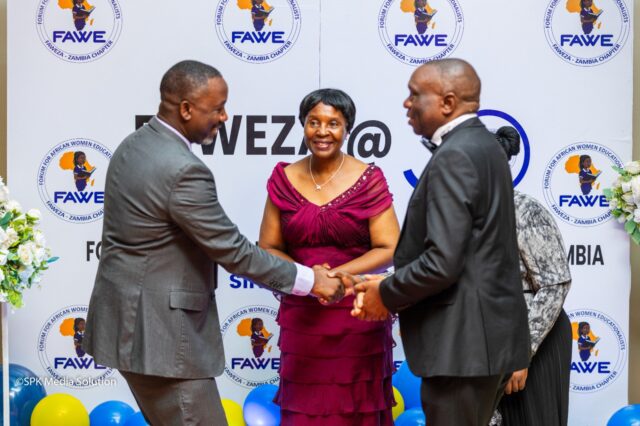

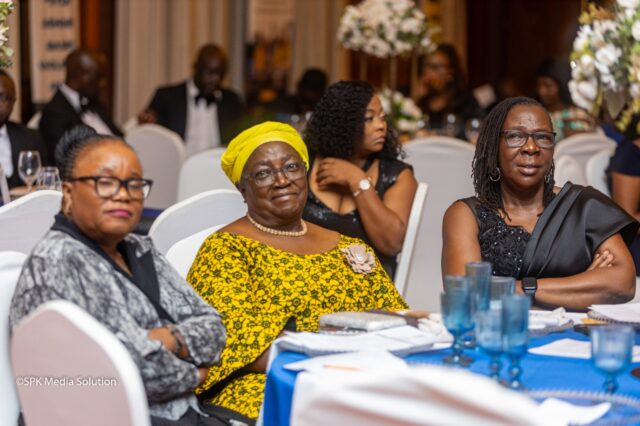
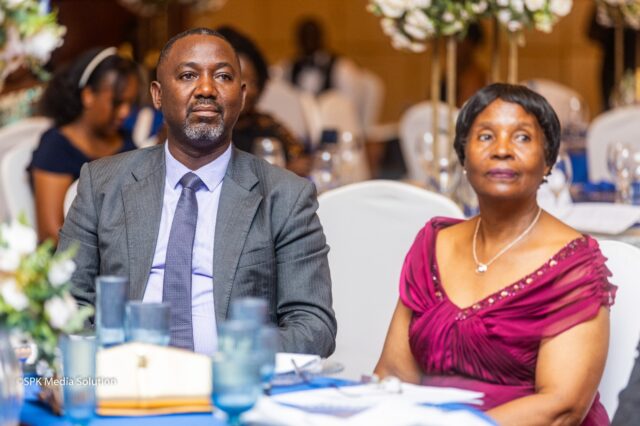
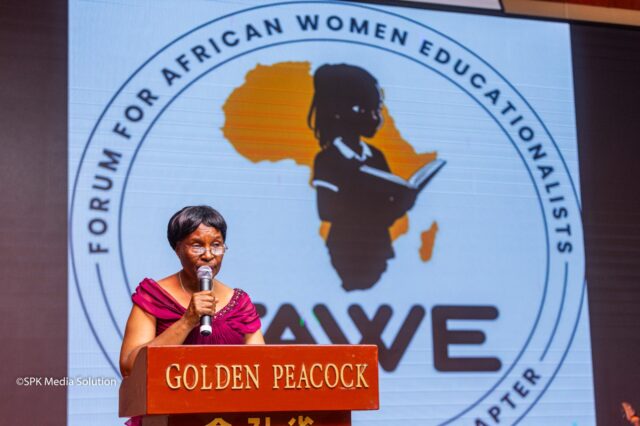
Speaking at the same event, FAWE Africa Executive Director Dr Martha Muhwezi congratulated the Zambian chapter for translating continental advocacy into meaningful change at community level.
“Tonight, we gather not merely to mark the passage of time, but to celebrate purpose in motion.”
Dr Muhwezi said FAWEZA has played a significant role in advancing girls’ participation and success in education in Zambia.
“FAWEZA has consistently translated continental frameworks into community realities.”
She stressed that educating girls is not merely a social obligation, but a vital driver of justice, economic progress and national development.
“Empowering girls through education is not charity. It is justice. It is economic strategy. It is nation building,” Dr Muhwezi said.
Earlier, FAWEZA National Executive Council Chairperson Professor Enala Mwase reflected on the organization’s 30-year journey, describing it as a story of courage, conviction and determination to confront gender inequality in education.
“Tonight is not simply about marking three decades of existence. It is about celebrating three decades of conviction. Three decades of persistence. Three decades of believing even when the odds were heavy that educating a girl is the most powerful investment a nation can make.”
Professor Mwase said FAWEZA was born at a time when the education system mirrored deep gender disparities.
“More boys than girls enrolled in Grade One. More boys progressed to secondary school. More boys completed. More boys dominated science and technical fields. Girls’ dreams were too often interrupted by poverty, teenage pregnancy, child marriage and gender-based violence.”
She said FAWEZA’s founders refused to accept those injustices as inevitable.
“Our founders refused to accept that reality as permanent. They organized. They advocated. They partnered. They pushed for reform,” Professor Mwase said.
Professor Mwase said over the years, FAWEZA has played an influential role in shaping Zambia’s education and gender policy landscape.
“The re-entry policy, which allows adolescent mothers to reclaim their school places, stands as one of the most humane and progressive education measures in our country and FAWEZA walked that advocacy journey with unwavering commitment. Our voice contributed to shaping the 2011 Education Act, the National Gender Policies, the Anti-Gender Based Violence Act, the Free Education Policy and national development frameworks.”
She said FAWEZA’s impact has gone beyond advocacy, extending into practical interventions that have changed lives in schools and communities.
“Over 86,000 scholarships have restored hope to vulnerable learners. More than 5,700 out-of-school children have been reintegrated through the Transit School model. Safe houses have protected over 1,700 girls from violence and harm.”
Professor Mwase added that programmes such as SAfE Clubs, Safe Spaces and Boys’ Forums have mentored thousands of young people, helping to build leadership, resilience and confidence.
She said FAWEZA has also championed girls’ participation in science, technology and technical education through its STEM initiatives.
“Through STEM expos, quiz competitions and strategic advocacy, girls have claimed space in science and technical education.”
Professor Mwase said the organization has also contributed to improving the quality of education through reading initiatives, remedial learning centres and teacher training.
“We have trained over 1,270 teachers in Gender-Responsive Pedagogy to ensure classrooms are inclusive and empowering.”
She emphasized that collaboration has been central to FAWEZA’s success over the past three decades.
“From the signing of a Memorandum of Understanding with the Ministry of Education, to alliances with civil society coalitions and community-based organizations, FAWEZA has never worked alone. We have strengthened systems rather than creating parallel ones. We have convened rather than competed. We have amplified collective voices rather than standing in isolation,” she said.
Even as FAWEZA marked three decades of impact, Professor Mwase said the organization remains aware of the challenges that continue to threaten girls’ education.
“Yet as we celebrate, we remain clear-eyed. Poverty, teenage pregnancy, child marriage and gender-based violence still threaten many girls’ educational journeys,” she said.